 DHMA
From Mamta Kafle Bhatt to Heera Devi Yami: Women's Safety, Justice, Education, STEAM, AI, and Human Values
A Tribute to Sarah Sami and the Women Who Stand for Justice
Introduction: A Tragedy That Must Become a Turning Point
The tragic murder of Mamta Kafle Bhatt, a young nurse of Nepali origin living in Virginia, USA, has deeply shaken the global Nepali community. Her case has brought renewed attention to women's safety, domestic violence, patriarchal attitudes, and the responsibility of institutions to protect vulnerable lives.
On November 10, 2026, a Virginia jury found her husband, Naresh Bhatt, guilty of first-degree murder, concealing a dead body, and defiling a dead body. Mamta's remains have yet to be recovered. His sentencing is scheduled for March 12, 2027. For the Nepali community, this case is not simply a criminal trial in a foreign country. It is a painful reminder that women can remain vulnerable even when they have education, professional careers, and opportunities to build independent lives. It also raises fundamental questions for our society.
Are we doing enough to protect women from domestic violence? Are our police forces and courts equipped to respond effectively? Are we raising children to understand that women and men deserve equal rights, dignity, and freedom? Most importantly, what kind of society are we constructing for the next generation?
This tragedy also gives us an opportunity to recognize individuals who have demonstrated exceptional commitment to justice. One such person is Sarah Sami, the Senior Assistant Commonwealth's Attorney who played a prominent role in presenting the prosecution's case against Naresh Bhatt.
A Special Tribute to Sarah Sami
What an extraordinary lawyer Sarah Sami is! Her powerful courtroom advocacy, determination, and commitment to justice deserve our deepest respect. We, the Nepali people, will always respect and remember you. You have created history through your courage, professionalism, and unwavering commitment to seeking justice for Mamta Kafle Bhatt. You stood before the court and helped ensure that Mamta's story was heard, even though she could no longer speak for herself. Your work has given the Nepali community a powerful example of how dedication to the law and the pursuit of truth can make a difference. Thank you, Sarah Sami. You have made us proud. Your contribution will always be remembered by the Nepali community.
1. What Can Nepal Learn from the American Justice System?
The Virginia trial demonstrated the importance of meticulous police investigation, scientific evidence, forensic testing, and effective legal advocacy in establishing accountability. The prosecution's work also highlighted the importance of presenting complex evidence in a manner that allows a jury to understand the facts and evaluate competing accounts. Nepal must examine its own criminal justice system and ask several difficult questions:
Do law enforcement agencies investigate complaints of violence against women with sufficient urgency? Do we have modern forensic laboratories and adequately trained specialists? Are prosecutors equipped to present strong, evidence-based cases? Can our judiciary deliver timely justice without debilitating bureaucratic delays? Are victims and their families provided with adequate protection and psychosocial support? Are threats, intimidation, and early signs of domestic abuse taken seriously before violence escalates?
True justice does not begin when a case reaches the Supreme Court. It begins the moment a woman approaches her local police station seeking protection. Every complaint deserves serious attention. Authorities must intervene before abuse becomes life-threatening. Nepal urgently needs stronger forensic infrastructure, specialized investigative training, victim-support mechanisms, and an accountable justice system that leaves no room for impunity.
2. Sarah Sami: The Power of Courage, Professionalism, and Justice
The role of Sarah Sami deserves particular recognition in this case. As Senior Assistant Commonwealth's Attorney, she represented the prosecution in the Virginia trial. Her courtroom arguments helped present the evidence and challenge the defendant's account before the jury. Her closing arguments were especially significant. She brought attention not only to the prosecution's evidence but also to the devastating human consequences of Mamta's disappearance and murder.
Mamta's family has faced an extraordinary tragedy. Her mother cannot bring her daughter home, conduct her final rites, or give her a traditional farewell because her remains have not been recovered. This is a pain that no verdict can completely erase. Sami's courtroom advocacy helped ensure that the human dimension of this tragedy was not lost amid the technical details of a criminal trial. Her contribution also reminds us of the importance of women in positions of professional leadership within the justice system.
We should recognize that justice requires more than laws written in books. It requires dedicated professionals who are willing to investigate, present evidence, question inconsistencies, and stand firmly for accountability.
For the Nepali community, Sarah Sami has become an inspiring example of professional commitment. Her work deserves recognition beyond the courtroom. Sarah Sami, we thank you for your dedication. We will remember your contribution and the courage with which you advocated for justice for Mamta Kafle Bhatt. The larger lesson is that every woman deserves access to a justice system that listens to her, believes that her safety matters, and acts before it is too late.
3. Ancient Traditions, Patriarchy, and the Burden on Women
We often take immense pride in our cultural heritage, ancient scriptures, and family traditions. Religious and mythological narratives are important parts of our civilizational history. However, their selective interpretation must never become an excuse for gender inequality or male domination. For example, the Bhagavata Purana describes Lord Krishna as having 16,108 wives. Such accounts belong to religious and mythological traditions and should be understood within their spiritual and literary contexts. The problem arises when selective interpretations of religious narratives are used to normalize unequal expectations of men and women. Even today, patriarchal socialization can shape how boys and girls understand relationships.
In some families, boys may grow up associating masculinity with authority, control, and entitlement, while girls are taught to tolerate unequal treatment and sacrifice their aspirations. This creates a dangerous understanding of relationships in which companionship becomes ownership and marriage becomes an instrument of control. We must challenge such conditioning. Respect, equality, consent, and mutual responsibility must form the foundations of every relationship. No religious, cultural, or family tradition should be used to justify the denial of women's freedom and dignity.
4. The Unseen Plight of Girls in Rural Nepal
While urban Nepal is experiencing rapid modernization, many girls in remote communities continue to face serious challenges arising from poverty, inadequate education, discriminatory traditions, and limited access to justice. Three issues deserve particular attention.
Child marriage
Despite legal prohibitions, child marriage persists in some communities. It deprives girls of education, compromises their health, restricts their independence, and pushes them into domestic and maternal responsibilities before they are ready.
Superstition and discrimination
Menstruation is a natural biological process. Yet, in some communities, beliefs surrounding purity, impurity, and divine appeasement have historically subjected girls to discriminatory and humiliating practices. Such practices must be challenged through education, scientific awareness, and community engagement.
The cruel doctrine of 'No Return'
Perhaps one of the most psychologically damaging forms of social conditioning is the belief that a married daughter must never return to her maternal home, regardless of what happens in her marriage. Some young brides are warned that returning home after a failed marriage will bring misfortune, natural calamities, or disgrace to their parents. Mothers and other female relatives may sometimes perpetuate these beliefs because they themselves have grown up within the same system. The result is devastating. A young woman experiencing domestic violence may feel that she has nowhere to go. A daughter's maternal home must always remain a place of safety, protection, and unconditional acceptance. No girl should be forced to endure violence because society has convinced her that returning home is a curse.
5. How Do Children Learn to Treat Women?
Children are keen observers. They learn values not simply from what adults teach them, but from what they see adults doing every day. When children repeatedly witness women tolerating disrespect, emotional abuse, and unequal treatment to preserve family honour, they may internalize these behaviours as normal. This is how discrimination becomes intergenerational. However, cultural conditioning is not destiny. Parents, teachers, community leaders, and educational institutions must model empathy, fairness, and mutual respect. Both boys and girls must grow up understanding that they have equal rights, equal dignity, and equal responsibilities. Children must learn that marriage is a partnership, not an ownership agreement. Neither partner has the right to control, intimidate, or dominate the other. The values we teach children today will determine the society they build tomorrow.
6. Heera Devi Yami: A Blueprint of Courage, Education, and Resistance
When discussing women's resilience, freedom, and democratic participation in Nepal, we must remember the extraordinary legacy of Heera Devi Yami. Growing up under the restrictive Rana regime, when women's education and freedom of movement were severely limited, she refused to accept the boundaries imposed upon women by society. Her life represents an important chapter in Nepal's struggle for democracy and women's empowerment.
A mother on the frontlines of freedom
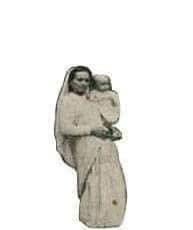
Heera Devi participated in clandestine democratic activities. She carried political messages, distributed pamphlets, supported underground activists, and provided shelter and assistance to those involved in the movement against the Rana regime. She undertook these responsibilities while raising young children and managing the challenges of family life. On August 15, 1947, she was arrested in Kathmandu for participating in Independence Day activities while holding her infant daughter, Dharma Devi. Her home also served as a refuge for political activists. At times, she helped feed and shelter more than a dozen underground workers despite the risks of surveillance and arrest. History frequently highlights male political leaders, public speeches, and political organizations. However, democratic movements also depended on the courage, sacrifice, and often invisible labour of women. Heera Devi was one of those women. Her contribution reminds us that women were not merely witnesses to Nepal's democratic struggle. They were active participants who helped sustain the movement.
Lessons from Heera Devi's life
Her life offers several important lessons: Women are capable of courageous leadership in difficult circumstances. Motherhood and participation in social and political movements are not mutually exclusive. Education develops the confidence to question injustice and challenge oppressive systems. Leadership is defined by service, integrity, and responsibility, not gender. Women's contributions must be recognized as an essential part of national history. One of Heera Devi's enduring messages was that education is something nobody can take away from you. That principle remains profoundly relevant today. Her story deserves a meaningful place in Nepal's history textbooks, educational institutions, and public discussions about women's leadership and democratic participation. We must ensure that future generations learn about the women who helped build the democratic foundations of our nation.
7. The Urgency of Rural STEAM Education and AI Literacy
Artificial Intelligence is rapidly transforming the global economy, education, governance, and everyday life. For Nepal, bringing Science, Technology, Engineering, Arts, and Mathematics (STEAM) education to rural schools is no longer simply an educational improvement. It is an economic, social, and national development priority. Rural children must have opportunities to become creators and innovators rather than merely consumers of technology.
Bridging the digital divide
Without foundational STEAM education, rural children risk being excluded from the opportunities created by technological transformation. Access to quality education and digital infrastructure can enable young people to develop solutions for agriculture, healthcare, environmental protection, local governance, and entrepreneurship.
Scientific thinking as an antidote to harmful superstition
STEAM education teaches children to examine evidence, ask questions, test hypotheses, and distinguish facts from assumptions. These abilities are essential in challenging harmful superstitions, discriminatory social practices, and rigid patriarchal beliefs. Technology alone cannot transform society. It must be accompanied by critical thinking, ethical awareness, empathy, and respect for human dignity. This is why the Arts component of STEAM is important. It connects scientific and technological innovation with culture, creativity, history, and human values.
Using AI to preserve women's history
Artificial Intelligence also offers an extraordinary opportunity to preserve and communicate forgotten histories. For example, the life and historical archives of Heera Devi Yami could be digitized and transformed into interactive, multilingual educational resources. Students could access oral histories, photographs, historical documents, and educational modules in Nepali, Newari, English, and other languages. Such an initiative would make women's contributions to Nepal's democratic history accessible to a new generation. AI should amplify human intelligence, not replace human judgment. Technology must strengthen education while preserving our humanity.
8. A Collective Call to Action: What Must Nepal Do?
Protecting women cannot be left to individual families or occasional public campaigns. It must become an institutional responsibility shared across all levels of society. Municipalities, universities, educational institutions, law enforcement agencies, the Nepal Bar Association, the judiciary, civil society organizations, and community groups must work together.
The following priorities deserve immediate attention: Strengthen law enforcement: Establish responsive mechanisms for reporting domestic violence, threats, harassment, and abuse. Modernize forensic services: Invest in scientific investigation, forensic laboratories, and specialized professional training.Ensure timely justice: Strengthen prosecution and judicial processes so that victims do not face endless delays. Protect vulnerable women and girls: Expand safe shelters, legal assistance, counselling, and psychosocial support.
End child marriage: Strengthen community awareness, education, enforcement, and local monitoring.
Reform social attitudes: Engage parents, teachers, religious leaders, and community organizations in promoting gender equality.
Strengthen education: Ensure that girls in rural communities have access to quality education and opportunities for economic independence.
Promote STEAM and AI literacy: Introduce practical, accessible, and ethical technology education in rural schools.
Preserve women's history: Document and integrate the contributions of women such as Heera Devi Yami into national curricula and digital archives.
Establish institutional accountability: Regularly assess whether policies and public institutions are actually making women and girls safer.
Conclusion: Building a Society That Respects Every Human Life
The tragedy of Mamta Kafle Bhatt, the professional commitment demonstrated by Sarah Sami, and the life of Heera Devi Yami bring us to a common question:
What does it mean to build a society that respects women's lives, freedom, and dignity? Mamta's case reminds us that no woman should be left unprotected when she faces violence or threats. Sarah Sami reminds us that professional courage, legal knowledge, and commitment to justice can help ensure accountability and give a voice to victims who can no longer speak for themselves.
Heera Devi Yami reminds us that women are not simply recipients of protection. They are leaders, educators, political participants, innovators, and builders of society.
Nepal must learn from all three.
We need a society in which girls can pursue education without discrimination, women can leave abusive relationships without fear, and boys grow up understanding equality and mutual respect. We must combine the lessons of history with the opportunities of modern science and technology. STEAM education and Artificial Intelligence can help create a more informed, innovative, and inclusive society, but technology must always remain guided by ethics and human values. Ultimately, the success of our institutions should be measured by one simple but uncompromising question: Are women and girls safer today than they were yesterday? Laws written on paper, policies announced in public, and technology introduced in classrooms have little meaning unless they improve the lives of real people. A just society is not measured by its technological advancement or cultural pride alone. It is measured by how it treats its most vulnerable members. The future of Nepal depends not only on how intelligently we develop technology, but also on how courageously we defend justice, how equally we educate our children, and how humanely we treat one another.