 DHMA
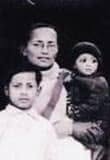
Women’s Safety, Justice, Education, Science, AI, and Human Values: Lessons from Mamta Kafle Bhatt and Heera Devi Yami
Introduction
The tragic murder of Mamta Kafle Bhatt, a young Nepali nurse living in Virginia, USA, has deeply shocked Nepalis around the world. Her story forces us to think seriously about women’s safety, domestic violence, toxic family habits, and whether our police and courts are truly protecting vulnerable people.
On November 10, 2026, a court in Virginia found her husband, Naresh Bhatt, guilty of first-degree murder and hiding her body (her body has still not been found). He will receive his punishment on March 12, 2027.
This tragedy is a wake-up call for all of us, both in Nepal and abroad. We must ask ourselves some honest questions: What can we learn from American courts? Are Nepal’s police and courts doing enough to protect women? Are we teaching our children to treat women as equals?
Most importantly: What kind of society are we building for our children?
1. What Can Nepal Learn from American Courts?
The trial in Virginia showed how careful police work, modern science, forensic testing, and strong lawyers help bring criminals to justice. Nepal needs to look closely at how strong legal systems investigate serious crimes and punish offenders.
To fix our own system, we must ask: Do our police treat violence against women and girls as an urgent emergency? Do we have modern labs and trained experts to collect proper scientific proof? Are government lawyers building strong cases in court? Can our courts give quick decisions instead of making victims wait for years? Are victims and their families kept safe and given mental health support? Are abusive people stopped before their threats turn into murder?
Real justice does not start at the Supreme Court. It starts the moment a woman walks into a local police station and ward for help. The police must take every complaint seriously and act before it is too late. Nepal urgently needs modern crime labs, better training, and a justice system where no criminal goes unpunished.
2. Old Traditions, Child Marriage, and Unfair Rules for Women
We are rightly proud of our culture, ancient stories, and family traditions. For example, the Bhagavata Purana mentions that Lord Krishna had 16,108 wives and 80 sons from his main queens. While these stories have spiritual meaning, people have often misused religious and cultural tales to give men total power while putting strict, unfair rules on women.
Even today, many young boys are raised with the wrong idea of what it means to be a man. They are taught—directly or indirectly—that controlling women is normal. This makes boys feel like they "own" women, while girls are taught to stay quiet and obey.
3. The Hidden Suffering of Girls in Rural Nepal Today
While cities in Nepal are modernizing quickly, life for young girls in many remote villages is still full of neglect, superstition, and fear:
Child Marriage: Even though it is against the law, child marriage still happens in many villages. It steals a girl’s education, health, and childhood, forcing her to become a wife and mother too soon.
Harmful Superstitions: In some areas, old beliefs about "purity" ruin a girl’s life. Historically, if a girl got her first period before marriage, superstitious customs forced families to hand her over to a wandering holy man (jogi). A completely normal part of growing up was treated like a curse.
The Cruel Rule of "Never Come Back": One of the most painful traditions is how young brides are brainwashed before they leave home. Families—often led by mothers who suffered the same thing—tell young girls that if their marriage fails and they return to their parents' home, they will bring bad luck and disaster to the family. Girls are told directly: "No matter what happens, do not come back." This closes the door to safety, forcing young women to suffer abuse in silence because going home feels like a crime.
When girls are taught from childhood that their bodies do not belong to them and that suffering is their duty, they become easy targets for abuse, trafficking, and violence. No tradition or superstition should ever be used as an excuse to hurt girls.
4. How Do Children Learn to Treat Women?
Children watch everything adults do. They learn values not from what we say, but from how we behave at home. In many families, unfair habits continue: women are told to tolerate bad treatment just to protect "family honor." When children see this every day, they think it is normal and repeat the same behavior when they grow up.
However, we can break this cycle. Parents and teachers can teach kindness, fairness, and respect. Both boys and girls must grow up knowing they have equal rights. Marriage is an equal partnership—neither person owns or controls the other. Safety, freedom, and respect belong to everyone.
5. Heera Devi Yami: A Role Model of Courage, Resistance, and Community Justice
When we talk about brave women and community justice in Nepal, we must remember Heera Devi Yami. She grew up during the strict Rana rule, when women were banned from getting an education or moving freely in public. Yet, she refused to accept this injustice.
From the Local Falcha to the Courts of Charkhal Adda
In the early 1900s, ordinary people could not go to court. Under the Rana rulers, justice was denied, and people were too scared to ask the government for help with land or family disputes. Because schools were banned, most people could not read or write, so everything was settled by word of mouth.
In the old neighborhoods of the Kathmandu Valley, public resting places called Falchas served as local meeting spots. Respected, honest elders (known as the Pancha Bhaladami) gathered there to settle neighborhood arguments and give advice on property and legal matters. Because Heera Devi Aama had lived in Calcutta, Kalimpong, and border areas of Bihar, she knew how to read and write and had a very sharp mind. Using this rare education at a time when schools were banned, she stepped forward at the local Falcha to give legal advice and help ordinary people fight property disputes and unfairness when they had nowhere else to go. Today, senior citizens in the Valley still remember her selfless help with deep respect and gratitude.
Her lifelong dedication to helping ordinary citizens deal with the law continued as Nepal’s court system developed. By the late 1950s and into the 1960s, even as courts slowly opened up, most people still could not read or write and remained afraid of government offices. At Charkhal Adda in Dillibazar, Kathmandu—one of Nepal's main government and court centers—Heera Devi Aama became a trusted, respected figure among lawyers and judges alike. She spent her time helping ordinary people read, write, and understand complex land and dispute papers so no one would lose their rights simply because they could not read or write. Even in her later years, while suffering from heart disease and severe asthma, she still went to the courts regularly to stand beside people who needed justice.
A Mother Fighting for Freedom
Beyond helping people with legal disputes, Heera Devi also risked her life in the secret fight for democracy. She carried hidden political messages, shared leaflets, and hid freedom fighters in her home—all while raising young children. In 1947, she was arrested in Kathmandu for organizing Independence Day events while holding a baby in her lap. At times, she fed and sheltered more than a dozen underground activists in her house under great danger.
What This Legacy Teaches Us
Women are natural, fearless leaders who stand up for justice. A woman can be a loving mother and a brave social leader at the same time. Education gives citizens the power to fight unfair systems and protect their legal rights. True leadership means serving others and protecting the weak. These stories should be taught in every Nepali school so young people know about the brave pioneers who risked everything to build a fair and democratic nation.
6. Why Rural Schools Need Science, Technology, and AI
As Artificial Intelligence (AI) changes the world, bringing Science, Technology, Engineering, Arts, and Mathematics (STEAM) to village schools is no longer optional—it is an urgent need. If rural communities want to overcome poverty and build a better future, every village school must teach these skills.
Equal Access to Technology: Without basic science and tech skills, village youth will only be passive users of technology instead of creators. Teaching STEAM helps rural youth use technology to improve farming, local businesses, and community services.
Fighting Superstition with Critical Thinking: Science teaches children to ask questions, look for proof, and find the truth. Clear, logical thinking is the best weapon against harmful superstitions and unfair traditions.
Adding the Arts (STEAM) teaches students to use technology with kindness, ethics, and care for human dignity. We can also use AI to save our history—for example, by turning the life story of Heera Devi Yami into easy-to-read lessons in Nepali and other local languages. Technology should make us smarter, while good values keep us human.
7. What Must Nepal Do Now?
Protecting women and girls cannot be left to luck. Every part of our society must work together—including Municipalities, Universities, Police, the Bar Association, Courts, and Civil Society & Community Groups.
In the end, we can judge our success by one simple question: Are women and girls actually safer today than they were yesterday? Laws written on paper mean nothing unless they protect real lives inside real homes.