 DHMA
A Special Historical Report on Secret Education, Public Terror, and Underground Resistance in Mid-Century Nepal
Introduction: Rule by Fear and Manipulation
In the 1940s, the autocratic Rana regime ruled the Kathmandu Valley with total control for over 100 years. They maintained power not only through the army and police, but also by deeply scaring and manipulating the public mind.
For generations, ordinary people—especially in the Newar communities of the Valley—were taught from childhood to believe that natural disasters like floods, landslides, earthquakes, and diseases were not natural events. Instead, they were taught that these were signs of anger from gods and religious powers. The Rana rulers used these beliefs to create a culture of fear, making people believe that going against the government was a sin against God.
This fear was shown most brutally during the public executions of early freedom fighters. When martyr Dharmabhakta Mathema was publicly hanged from a tree at Pachali Bhairab in Tripureshwor, the regime forced the public to go and watch his hanging body as a warning. Shaped by years of brainwashing, many people returned saying:
“Good, good. Such people should suffer. Why revolt against the Rana regime? Those who revolt are destined to be hanged and killed like Dharmabhakta Mathema, Ganga Lal, Shukraraj Shastri, and Dashrath Chand.”
In this way, the public was taught to see any fight for freedom as dangerous and foolish.
The Lhasa Newar Trade and Women’s Seclusion
This environment of fear directly affected the Lhasa Newar trading families. Male family members spent years traveling the dangerous Silk Road to Lhasa in Tibet across the high Himalayas. Many of them never returned, dying in sudden blizzards, floods, earthquakes, and landslides. Because men disappeared for long periods, it became a common practice to make official public announcements about loans and financial matters before leaving.
With husbands and fathers away for years, households were left unprotected. The Rana rulers and powerful elites routinely targeted these defenseless homes, taking women for their own pleasure.
To protect women, families forced them to stay strictly indoors behind carved wooden lattice windows (sanjhya). From behind these screens, women could look down at the street without being seen from the outside. Girls were strictly forbidden from going to school or learning to read and write, as female education was treated as a major social taboo.
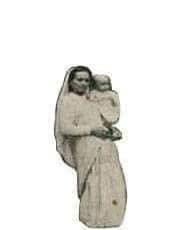
However, when Heera Devi grew up and married the revolutionary writer Dharma Ratna Yami, she chose a very dangerous path. Fighting the Rana regime meant stepping out from behind the hidden windows into a society that had been brainwashed to hate and fear rebellion.
Secret Teaching at Buddhi Bikas School
Knowing her courage and commitment, underground freedom fighters and political prisoners helped Heera Devi get a job teaching at Buddhi Bikas School, located behind Mahadev Than in the Basantapur / Hanuman Dhoka area.
Her appointment quickly led to a dangerous cat-and-mouse game with the government. Soon, the school owners received threatening phone calls from Rana officials demanding that she be fired immediately.
Under heavy police surveillance, Heera Devi had to use extraordinary ways to keep teaching:
Hiding in Dark Courtyards (Chokes): She taught her young students in dark, hidden courtyards and poorly lit inner corners to keep them safe from secret police.
Moving Through Narrow Gully Lanes: Whenever secret police came close, she quickly moved the children from one courtyard to another through narrow alleyways to avoid getting caught.
Forced Boycotts: Terrified of government punishment, the school administration eventually gave in to the Rana regime. They even pressured and manipulated the children to stop attending her classes and demand her removal.
Facing Public Hostility on the Streets
Whenever Heera Devi walked on public roads, she faced constant insults and harassment from society:
Water Thrown from Attic Windows: Conservative neighbors standing on upper-floor attic verandas regularly dumped full buckets of cold water on her head while shouting abusive words.
Verbal Abuse Outside Prisons: As she walked long distances to Nakhu Jail and Bhadragol Jail to deliver food and medicine to political prisoners, local shopkeepers and onlookers shouted insults, publicly accusing her of abandoning her home and flirting with men while her husband was in prison.
Survival Strategy: Bones, Nettles, and Prison Cells
Without any money to buy rice or grains, Heera Devi created creative ways to feed her family and hidden freedom fighters:
Collecting Discarded Bones: She went to local butcher shops and asked for throwaway buffalo bones meant for stray dogs. She dried these bones in the sun and stored them in large earthen pots (Tepa).
Nettle Soup (Sishnu): She gathered wild Himalayan nettle plants (Sishnu) from surrounding fields and cooked them with the dried bones to make a basic soup, which sustained underground activists hiding across the Valley.
State cruelty against her reached its peak during her arrests. After leading a major public protest at Maru Tole when her first baby was only one month old, she was locked in a bug-infested prison cell alongside male prisoners.
In December 1948, she was arrested again right after giving birth to her second child. Still bleeding, she was forced to stand for eight hours every day in freezing cold barracks during interrogation. A kind neighbor, Chhal Kumari Mali, risked her life by sneaking through alleyways to secretly lend and wash clean sarees for Heera Devi so she could face police questioning with dignity.
Inside the jail cell, fellow prisoners collectively named her newborn son Vidhan (meaning "Constitution"), turning a baby’s survival into a symbol for a democratic Nepal.
An Unfading Legacy
Heera Devi Yami passed away in 1970 at the age of 49. By overcoming physical police violence, extreme poverty, and the deep psychological fear engineered by the state, she helped break the culture of silence and laid the cornerstone for freedom and democracy in Nepal.