 DHMA
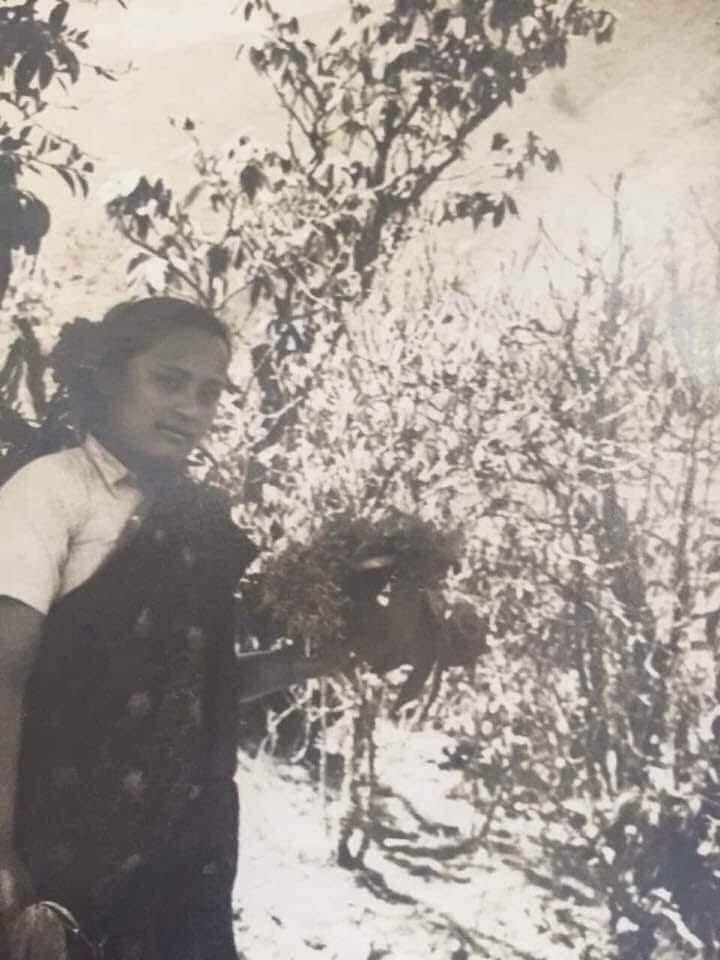
In an era when knowledge is instant and artificial intelligence generates answers in fractions of a second, true human agency can feel increasingly rare. Yet history shows that genuine wisdom, leadership, and critical thinking have never depended on convenience. They are born of courage, observation, and the refusal to let outside forces dictate human potential.
The life of Heera Devi Yami—a pioneering figure in Nepal’s early struggle for democracy and female literacy—stands as a timeless testament to this truth. Her story, alongside the lived experiences of elderly Lhasa Newar matriarchs, offers a profound framework for understanding human intelligence in the digital age.
Part I: Literacy in the Shadows of the Rana Regime
In early twentieth-century Kathmandu, educational access for women was not merely discouraged; it was systematically forbidden. Operating under the autocratic Rana regime (1846–1951), public education was strictly outlawed to prevent the rise of democratic consciousness. Community norms strictly reinforced these restrictions through fear, warning families that if a young girl touched paper or wrote words, she would bring severe spiritual misfortune upon her household.
For Heera Devi Yami, these social barriers were compounded by personal adversity: she suffered from frail, chronic health during a period when modern medical care was virtually non-existent in the Kathmandu Valley. Restricted by both illness and social custom, her universe was narrow.
However, her life took a decisive turn through the intervention of Jagat Lal Master (Jagat Lal Shrestha), one of the key unsung figures of Nepal’s early modern educational movement. Renowned in Kathmandu for taking immense personal risks to teach children in secret despite severe state threats, Jagat Lal Master risked imprisonment, state harassment, and confiscation of property to spread literacy.
Recognizing young Heera’s keen intelligence and moved by compassion for her isolated, bedridden state, Jagat Lal Master personally arranged her secret tutoring:
Smuggled Slips of Paper: He devised a covert method to smuggle reading slips inscribed with words and numbers into her neighborhood, entirely concealed beneath his large woolen shawl.
Memorization in Secrecy: Heera Devi took the smuggled papers, concealed them beneath her own shawl, and studied until every lesson was committed to memory—hidden safely from family members and state spies.
Igniting Political Consciousness: Finding her extraordinarily quick to comprehend complex ideas, Jagat Lal Master continually encouraged her studies in absolute secrecy, igniting the literacy that powered her life as a political activist and advocate for women.
Through these smuggled scraps of paper, Heera Devi mastered basic literacy and numeracy. More importantly, she cultivated an independent mind—one capable of seeing beyond the rigid constraints of her era.
Part II: From Hidden Letters to Political Awakening
Heera Devi Yami’s secret education did not remain an academic exercise. As Nepal entered a turbulent period of political awakening in the mid-twentieth century, her covertly developed literacy became a powerful tool for civic action.
She actively joined the movement against autocratic rule, advocating for women's rights, democratic governance, and social justice. Her journey demonstrated a fundamental truth: education is not defined by formal school buildings or official diplomas. Real intellectual empowerment springs from curiosity, keen observation, exposure to ideas, and the moral courage to question injustice.
Part III: The Matriarchs of Lhasa Newar Families
Heera Devi Yami’s resilience was part of a broader, quiet tradition of self-reliance among women of her era. This spirit is vividly preserved in the living memory of elderly women from Lhasa Newar merchant families—matriarchs now over 90 years old who navigated dramatic historical shifts across the Himalayas.
For centuries, Newar traders maintained commercial outposts in Tibet. This trade required male merchants to undertake perilous journeys, often leaving their families in Kathmandu for years at a time. When political shifts and boundary changes led to the closure of traditional cross-Himalayan trade routes, these long separations became even more complex and isolating.
A mini-survey conducted among these elderly matriarchs highlights how women sustained their households and communities without formal training:
Household Economics: They independently managed complex family budgets, trade remittances, and property decisions during multi-year spousal absences.
Social Capital: They preserved intricate ritual networks, cultural traditions, and community support systems that kept urban society intact.
Quiet Endurance: They exercised sustained mental resilience against severe geographical and social isolation.
Their lived experiences confirm that strategic resourcefulness, independent decision-making, and deep social awareness were essential for survival and leadership long before modern career platforms or institutional degrees were available to women.
Part IV: The Human Mind in the Age of Artificial Intelligence
Comparing early twentieth-century Nepal to today's landscape reveals a stark contrast. Where Heera Devi Yami fought to access scraps of paper hidden beneath a shawl, we now operate in a world overwhelmed by information. Artificial intelligence can summarize texts, write essays, and answer complex questions instantly.
Yet, this historical legacy invites us to reflect on a vital distinction: the difference between receiving information and engaging in independent thought.
Key Historical & Modern Comparison: Knowledge and Empowerment
1. Access to Information
In the Historical Era (Heera Devi Yami): Information and literacy were strictly banned by society and autocratic state authorities under the Rana regime. Gaining access to even basic reading material required immense effort, secrecy, and personal risk.
In the Modern AI Era: Information is endlessly abundant and available at our fingertips. Text, summaries, and answers can be generated instantly with zero friction.
2. The Challenge of Thinking
In the Historical Era: Acquiring knowledge demanded deep personal conviction, active memorization, and extraordinary courage in the face of strict social bans and state surveillance.
In the Modern AI Era: Because information comes so easily, there is a constant risk of cognitive passivity—relying passively on algorithmic outputs instead of actively exercising independent critical thought.
3. Core Lesson for the Digital Age
Technology—whether a slip of paper hidden under a shawl by a brave teacher like Jagat Lal Master or a complex artificial intelligence system—is merely a tool. True progress occurs only when technology expands human understanding rather than replacing human judgment, critical questioning, and moral conviction.
Conclusion: An Enduring Legacy
Heera Devi Yami’s life—alongside the courageous efforts of educators like Jagat Lal Master and the enduring wisdom of generations of Lhasa Newar matriarchs—reminds us that genuine progress requires more than technological speed or massive data streams.
It requires the courage to think independently, the wisdom to question prevailing norms, and the determination to act on one’s convictions. As we step further into the age of artificial intelligence, keeping this spirit alive remains our most essential human task.